If you’ve ever tried getting reliable internet outside city limits, you already know the story. ISPs make big promises that sound great. But in reality, slow speeds and unstable connections are what you get. Some users wait months for cables that may never arrive. We’ve seen homes and small businesses struggle with this for years. And honestly, most people just want something that works.
Thankfully, with evolving tech, instead of digging trenches or running miles of fiber, the internet can now be delivered through the air using nearby cell towers. This is made possible with 5G fixed wireless access. It’s a simpler, faster way to bring high-speed internet to places where traditional options don’t work well, especially in rural areas.
In this blog, we’ll discuss how it actually works, where it fits compared to wired internet, and why more providers are using it. Let’s begin.
What is 5G Fixed Wireless Access?
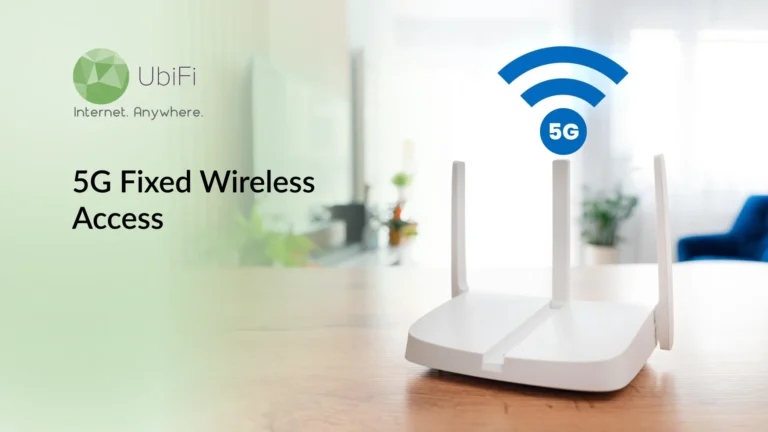
5G fixed wireless access (FWA) is a way to deliver fast internet to a fixed location, like your home or office, without using physical cables. Instead of fiber or DSL lines, it uses 5G radio signals sent from a nearby cell tower to a receiver installed at your location.
This receiver, often placed on a rooftop or near a window, picks up the signal and connects to a router that powers your internet inside the building. 5G FWA works on advanced networks designed for high data speeds and low delay.
The connection depends on signal strength, distance from the tower, and minimal physical obstacles. Since there’s no need to dig trenches or lay cables, it can be deployed much faster and at a lower cost. That’s why it’s becoming a practical option, especially in areas where traditional internet is limited or too expensive to install.
How Does 5G FWA Work
5G FWA (Fixed Wireless Access) works by sending internet signals over the air from a nearby cell tower directly to your location. This transmission does not include cables.
- Network Infrastructure (Cell Towers & Core Network): Everything starts with 5G base stations placed across an area. A powerful core network connects these towers, managing data flow, traffic load, and stability. The closer and clearer your line to the tower, the stronger your connection will be.
- Customer Premises Equipment (CPE): At your location, a receiver (often placed on a roof, wall, or near a window) picks up the 5G signal. This device connects to a router inside your home or office. From there, your internet runs through WiFi or Ethernet, just like any regular connection.
- Spectrum & Frequency Bands: 5G uses different frequency bands to balance speed and coverage. Lower bands (sub-6 GHz) cover long distances and work better through walls, making them ideal for wider areas. Higher bands (mmWave) deliver very fast speeds but work best over shorter distances with fewer obstacles.
- Advanced Antenna Technologies: Technologies like Massive MIMO and 5G beamforming improve performance. Multiple antennas handle more data at once, while beamforming directs the signal straight to your location instead of spreading it everywhere. This results in better speed and fewer dropouts.
- Network Slicing: The network can be divided into dedicated “slices” for different uses. This helps maintain consistent performance by prioritizing certain types of traffic when needed, keeping the connection stable even during peak usage.
In short, 5G FWA replaces physical cables with a direct wireless link from the tower to your location. It combines smart network design and modern hardware to deliver fast, stable internet without needing physical cables.
Benefits of 5G Fixed Wireless Access (FWA)
When you look at real-world connectivity problems, especially in rural areas, the value of 5G FWA becomes clear. It solves issues that wired networks often struggle with, making it a practical solution for reliable rural internet access.
– Fast Deployment without Cables
One of the biggest advantages is the speed of setup. There’s no digging or complex installation. Providers can activate service much faster compared to fiber or cable, which often takes months.
– Brings Internet to Underserved Areas
It fills the gap where traditional broadband doesn’t reach. Homes and businesses in remote or rural areas can finally get reliable internet without waiting for infrastructure expansion.
– High Speeds with Low Delay
5G FWA can deliver speeds that match or even compete with wired connections. It also offers lower latency than satellite, making it suitable for streaming, video calls, and daily work.
– Lower Setup and Maintenance Costs
Since there are fewer physical components, the cost stays lower. There’s less need for repairs, and many issues can be fixed remotely by providers.
– Clean and Simple Setup
No need for messy wiring across your property. You typically need just a receiver and a router. It keeps installation simple and less intrusive.
– Reliable Backup Option
Even in areas with fiber, many businesses use 5G FWA as a backup internet connection for home. If a wired line fails, this keeps the connection running smoothly.
– Scales Easily as Needs Grow
Adding more users or devices is simple and doesn’t require major changes. The network can expand without rebuilding infrastructure, which is useful for growing homes, farms, or small businesses.
– Supports Modern Use Cases
From smart devices to remote monitoring, it handles connected systems well. This makes it useful not just for homes, but also for agriculture, healthcare, and local operations.
In short, 5G FWA removes the biggest barriers of wired internet, i.e., time, cost, and reach. It offers a practical, high-speed solution where traditional broadband struggles to keep up.
Disadvantages of 5G Fixed Wireless Access (FWA)
While 5G FWA solves many connectivity problems, it’s not perfect. There are a few practical limits you should understand before relying on it.
– Signal Depends on Location
Your connection quality is heavily tied to how close you are to the tower. Distance, terrain, trees, and even walls can weaken the signal and affect performance.
– Line-of-Sight Challenges
For best results, the receiver needs a clear path to the tower. In areas with dense trees, hills, or buildings, speeds can drop, and stability can suffer.
– Speed Can Fluctuate
Unlike fiber, speeds are not always consistent. They can vary based on network load, time of day, and how many users are connected to the same tower.
– Slower Than Fiber in Many Cases
While speeds are good, they usually don’t match high-end fiber connections. If fiber is available, it remains the more stable and faster option.
– Limited Availability
5G FWA is still expanding. Not all rural or remote areas have access yet, and provider options can be limited depending on your location.
– Initial Equipment Setup
You may need a dedicated receiver or outdoor unit. In some cases, proper placement or professional setup is required to get the best signal.
– Not Designed for Mobility
This is a fixed connection. It works at one location only. If you move, the setup needs to be reinstalled or adjusted.
In short, 5G FWA is powerful, but it depends on location, signal quality, and network conditions. It works best where coverage is strong, but it may not fully replace fiber everywhere.
Is 5G Home Internet Fixed Wireless Access Reliable?
In most real-world scenarios, 5G home internet works reliably for everyday use. But like any wireless system, its consistency depends on a few key factors.
- Strong Day-to-Day Performance: For regular tasks like browsing, streaming, and video calls, it performs well. Most users experience stable connectivity throughout the day.
- Network Congestion Can Slow Speeds: Since multiple users share the same tower, speeds may drop during peak hours. Heavy usage in your area can reduce available bandwidth.
- Signal Strength Matters: Reliability depends on how strong your signal is. The distance from the tower, obstacles, and the placement of your receiver all contribute to the signal’s strength.
- Higher Delay Compared to Fiber: Fixed Wireless connections can have slight delays in data delivery. This may affect activities like gaming or real-time streaming where timing matters.
- Provider Traffic Management: In some cases, networks may prioritize mobile users over home connections during high demand. This can lead to temporary slowdowns.
- No Cable Failures: Since there are no underground wires, it avoids issues like cable cuts or line damage. This can make it more resilient in certain situations.
In short, 5G FWA is reliable for everyday internet use when signal conditions are strong. However, performance can vary based on network load and your location.
What are 5G FWA Use Cases?
5G FWA is not limited to one type of user. It fits into multiple real-world scenarios where traditional internet either fails or takes too long to deploy.
- Residential Broadband (Especially Rural Homes): One of the most common use cases. It delivers reliable home internet where cable or fiber is unavailable or too expensive. Ideal for streaming, work-from-home, and daily usage without waiting for a wired infrastructure.
- Small Businesses & Enterprises: Shops, offices, and remote teams use it for fast setup and stable connectivity. It supports cloud tools, video meetings, and payment systems without needing special lines.
- Rural & Remote Operations: Farms, warehouses, and remote locations rely on it to stay connected. It enables use cases like equipment monitoring, irrigation systems, and basic tasks where wired networks can’t reach.
- Temporary Sites & Events: Construction sites, exhibitions, and pop-up spots get quick internet setup. No need for permanent installation. It works well for short-term connectivity needs.
- Backup Internet for Businesses: Many companies use it as a failover connection. If the main wired line fails, 5G FWA keeps them online without interruption.
- Smart Systems & IoT Applications: It supports connected devices like security systems, sensors, and remote monitoring tools. Useful in sectors like healthcare, logistics, and local infrastructure management.
- Emergency & Disaster Recovery: In situations where networks go down, it can restore connectivity quickly. This makes it valuable during outages, natural disasters, or urgent needs.
In short, 5G FWA suits everyday and specialized needs, from homes to businesses. It works best where speed, flexibility, and quick setup matter more than fixed wiring.
Experience High-Speed Internet Wherever You Go
Get in TouchClosing Lines
5G fixed wireless access is changing how the internet reaches homes and businesses, especially in areas where cables are hard to install. Instead of waiting months for fiber, you can get connected through a nearby tower with a simple setup. It delivers strong speeds, decent reliability, and offers a practical alternative to traditional broadband.
At the same time, it’s important to understand its limits. Performance can vary based on location, signal strength, and network traffic load. It can overcome connectivity gaps. From rural homes to small businesses and temporary sites, it provides a level of flexibility that wired networks often can’t match.
It may not replace fiber everywhere, but in many situations, it’s the most realistic and efficient option available today. So if you want reliable internet that works instantly without any setup, explore our plans.
FAQs on 5G Fixed Wireless Access
What does fixed wireless access mean?
Fixed wireless access refers to delivering internet to a specific location using wireless signals instead of cables. A receiver at your home connects to a nearby tower to bring the internet inside. It replaces the need for fiber or DSL in the last mile.
Is 5G FWA better than fiber?
It depends on availability and need. Fiber offers more consistent speeds and lower latency. 5G FWA is easier to set up and works well where fiber is not available. In many rural areas, it’s the more practical choice.
What is the difference between 5G and 5G FWA?
5G is a mobile network used by phones and devices on the move. 5G FWA uses the same network but delivers internet to a fixed location, like a home or office. It acts more like a home broadband connection.
How fast is 5G FWA?
Speeds usually range from 100 Mbps to 300 Mbps, and in some cases even higher. Actual speed depends on signal strength, network use, and location. It is fast enough for streaming, work, and daily use.