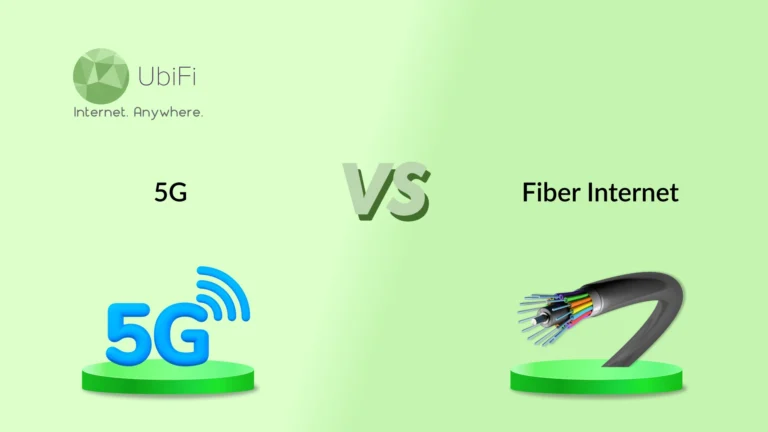
On paper, both 5G and fiber promise fast internet. However, the experience can feel completely different in reality. One connection stays steady even with dozens of devices connected. The other offers flexibility and quick setup, but may slow down when the network is busy. That gap is exactly why the debate around 5G vs fiber internet has become more frequent.
For many households, the decision is important. It affects video calls, streaming, online classes, security systems, and staying connected without constant interruptions. Fiber and modern 5G home internet speed both solve problems in different ways. But the better option often depends on where the connection is used and on daily internet habits.
In this blog, the difference between fiber and 5G will be discussed. From actual 5G internet speed and reliability to coverage and performance under daily use, we will break down both options in detail. Let’s start.
What is 5G Internet?
5G internet is a wireless internet service that uses signals from nearby 5G cell towers to connect homes to the internet. Instead of cables, a small modem or gateway inside the house receives the signal and turns it into WiFi. The setup is simple and works much like a mobile phone connecting to a cellular network.
The “5G” stands for fifth-generation wireless technology, which is newer and faster than 4G networks. It is designed to deliver higher 5G speeds, lower delay, and stronger network capacity for modern internet use. The actual 5G internet speed depends on signal strength, distance from the tower, and network coverage in the area.
Pros & Cons of 5G Internet
5G home internet has changed how people connect to the web, especially where wired options are limited. It brings both advantages and a few limitations that matter in daily use.
Pros of 5G Internet
- Delivers high download speeds, often much faster than older 4G networks.
- Low latency reduces delay during video calls, streaming, and online activity.
- Quick setup with a plug-and-play gateway, no digging or wiring required.
- Works well in locations where fiber or cable infrastructure is not available.
- Can support multiple connected devices in a single home when the signal strength is strong.
- Often comes with simple monthly pricing without complex installation costs.
Cons of 5G Internet
- Coverage is inconsistent and depends heavily on the availability of nearby towers.
- Performance drops due to distance from towers or physical obstacles like buildings and trees.
- Network congestion can reduce speed during peak usage hours.
- Real-world 5G speed and stability vary widely by location.
- Signal range is limited, so many small cells are needed to cover areas fully.
- Security and stability still depend on provider infrastructure and network strength.
5G internet delivers strong speed and flexibility, but its performance depends heavily on location and signal quality. It is fast where coverage is strong, but less stable than wired networks like fiber.
Common 5G Internet Use Cases
5G internet is not only about faster browsing. Its real strength shows when it is used in systems that need quick, continuous, and large-scale connectivity.
- Remote healthcare: Supports video-based consultations and even real-time monitoring of patients from a distance, where a stable connection speed is critical.
- Online learning: Helps live classes run more smoothly with fewer delays, making interactive education more reliable for students in different locations.
- Smart transportation systems: Let vehicles and traffic systems share data quickly to improve coordination and road safety.
- Smart city infrastructure: Powers systems such as traffic lights, public safety sensors, and utility monitoring through continuous data exchange.
- Connected devices (IoT): Allows thousands of devices, such as sensors, cameras, and machines, to communicate simultaneously without slowing down the network.
- Industrial automation: Supports factories and large-scale operations where machines need to exchange data instantly to ensure a smooth workflow and monitoring.
In short, 5G is a super-fast, lag-free connection built for heavy-duty tasks. It connects everything from remote doctors and smooth online classes to smart traffic, city sensors, and automated factories.
What is Fiber Internet?
Fiber internet is a wired internet connection that uses thin strands of glass called fiber-optic cables. These cables carry data using light signals, unlike electrical signals used in older copper networks. The design allows data to travel long distances with minimal loss of quality, which helps keep the connection stable.
At a technical level, the light travels through the cable’s core and is held by a special protective layer called cladding. At both ends, devices convert these light signals back into digital data that computers and routers can understand.
Many modern fiber systems also support multi-gigabit capacity. It enables them to handle very large volumes of data simultaneously without disturbing the flow.
Pros & Cons of Fiber Internet
Fiber internet is one of the most advanced wired connections available today, offering very high performance along with a few practical limitations depending on location and infrastructure.
Pros of Fiber Internet
- Uploading and downloading speeds are very high.
- Symmetrical performance, meaning upload speed is as strong as download speed.
- Very stable connection with minimal fluctuation during heavy usage.
- Not easily affected by distance, weather, or physical obstacles.
- Can support large numbers of connected devices without major slowdowns.
Many plans offer high or unlimited data usage with no data caps.
Cons of Fiber Internet
- Limited availability since installation requires physical fiber infrastructure.
- Higher setup complexity due to the need for last-mile wiring to homes or buildings.
- Installation can be expensive for providers, affecting pricing in some areas.
- Not accessible in many rural or remote locations yet.
- Expansion depends heavily on infrastructure rollout, which takes time.
Fiber internet delivers high speeds, consistent performance, especially in heavy-usage areas. The main limitation is access, as coverage is still expanding across many regions.
Common Fiber Internet Use Cases
Fiber internet is widely used where speed, stability, and consistent performance matter in everyday digital tasks.
- Remote work and office setups: Supports smooth video meetings, large file transfers, and real-time collaboration without delays.
- Online education: Handles live classes, screen sharing, and interactive learning tools with stable performance.
- Streaming and entertainment: Delivers high-quality video streaming, including 4K content, without buffering.
- Online gaming: Reduces lag and keeps gameplay smooth during fast-paced multiplayer sessions
- Healthcare and telemedicine: Offers clear video consultations and secure data exchange between patients and providers.
- Business operations: Supports cloud-based tools, large data handling, and multiple users working at the same time.
Fiber internet is commonly used in environments where multiple activities run simultaneously, and steady performance is important. It maintains strong speed even under heavy digital load, making it suitable for both home and professional setups.
Fiber vs 5G Internet: Key Differences
5G and fiber internet both deliver high-speed connectivity, but they differ in how they are built, how they perform, and how consistently they work in real-world conditions.
Speed
- 5G internet: 5G offers fast wireless speeds in strong coverage areas. However, speed often varies with signal strength, distance from towers, and network load. Upload speeds are usually lower than download speeds.
- Fiber internet: Fiber delivers very fast and stable speeds, often reaching gigabit or multi-gigabit levels. Upload and download speeds are usually equal, which helps with heavy data tasks and smooth performance across devices.
Latency (Response Time)
- 5G internet: Latency is lower than older wireless networks, but still varies depending on congestion and coverage. In busy areas, response time can increase slightly during peak usage.
- Fiber internet: Fiber has extremely low latency, often close to real-time response. Data travels through light signals in cables, which keeps the delay minimal and stable.
Reliability
- 5G internet: Performance can fluctuate due to signal strength, weather conditions, and physical barriers like buildings or trees. Network congestion can also impact consistency.
- Fiber internet: Fiber offers a highly stable and consistent connection. Since it uses wired infrastructure, performance remains steady even under heavy usage.
Availability
- 5G internet: Easier to access in areas where mobile coverage is strong. No physical wiring is needed, but availability still depends on tower density.
- Fiber internet: Depends on physical infrastructure. Common in many urban regions, but still expanding in rural and remote areas due to installation requirements.
Cost
- 5G internet: Often easier to set up with lower installation barriers. Monthly pricing may vary, and some plans include mobile services.
- Fiber internet: Requires a lot of setup, but pricing is often stable once available. Long-term value is strong due to consistent performance.
5G is flexible and easy to access, while fiber is built for consistent, high-performance connectivity. The better option depends on location and daily internet demand.
Factors for Choosing Between 5G Internet and Fiber Internet
Choosing between 5G and fiber internet depends on which one fits your location and daily usage patterns. A few practical factors make the decision much clearer.
- Availability in your area: Internet choice often starts here. Fiber depends on physical cables, so it may not reach every location. 5G depends on nearby mobile towers and network coverage, which can vary even within the same region.
- Daily internet usage needs: Households with heavy usage, such as streaming, online classes, or cloud-based work, usually need stable, high-capacity connections. Fiber handles continuous demand more consistently. 5G works well for moderate use where flexibility matters more than stability.
- Speed and performance expectations: Fiber delivers consistent high speeds with low variation, even during peak hours. 5G speeds can be strong, but they may change based on signal strength, congestion, and distance from towers.
- Latency sensitivity: Activities that require real-time responses, such as gaming or video conferencing, perform better over low-latency connections. Fiber typically maintains more stable response times, while 5G can fluctuate under load.
- Budget and long-term cost: 5G is an easier entry and simpler setup. Fiber may require infrastructure investment in some areas, but it usually offers stronger long-term performance value for consistent users.
- Mobility and flexibility needs: 5G offers more flexibility, especially great for renters or users who may relocate. Fiber stays fixed but delivers more stable performance once installed.
5G suits flexibility and availability in areas without wired infrastructure. Fiber suits users who need steady performance and long-term reliability. The right choice depends on where the connection is used and how heavily it will be relied on every day.
Need help choosing the right type of internet connection?
Contact UsSumming Up
Both 5G and fiber internet solve the same basic need, but in very different ways. Fiber uses cables that deliver strong, stable, and high-speed performance. It stays consistent even when many devices are connected. 5G, on the other hand, uses wireless signals for quick access without cables, making it easier to use in places where fiber is not available.
The main difference is consistency versus flexibility. Fiber stands out for steady speeds, low delay, and reliable performance under heavy usage. 5G is easier to set up and has a wider reach in many areas, but its performance can vary with signal strength and network load. The right choice depends on location, usage habits, and how critical a stable internet is in daily life.
A careful look at coverage, speed expectations, and household usage helps make the decision clearer without confusion. If you’re looking for an internet connection built for your area and needs, explore our plans today.
FAQs on 5G vs Fiber Internet
Is 5G faster than fiber internet?
5G can deliver high speeds in strong coverage areas, but it is not always consistent. Fiber is generally faster and more stable, especially for heavy usage and multiple devices.
What is the biggest disadvantage of the 5G internet?
The main drawback is inconsistent performance. Speed and stability depend on signal strength, tower distance, and network congestion in the area.
Is 5G better than WiFi?
5G is not a replacement for WiFi. It is a way to bring the internet to a home, while WiFi is what distributes that internet inside the house. They work together, not against each other.
What is the downside to fiber optics?
Fiber internet depends on physical cables, so it is not available everywhere. Installation can also take time in areas where cables are not already in place.
Why does internet speed vary between locations?
Internet speed varies based on cables, distance from network sources, and local usage load. Fiber stays more stable, while 5G is more sensitive to location and signal quality.